Many runners assume that good performance requires expensive gear. Visit any sports store and you will see running shoes priced well above $150. But the truth is simple: performance does not always depend on price. Many budget athletic shoes offer solid cushioning, durability, and support for everyday runners.
According to data from the National Sporting Goods Association, more than 50 million Americans run or jog regularly. Yet surveys show that a large percentage prefer shoes under $100. The reason is practical. Casual runners, beginners, and fitness enthusiasts want reliable training footwear without overspending.
The challenge is knowing which features matter. Cheap shoes can still perform well if they offer proper cushioning, lightweight materials, breathable mesh, and stable midsoles. When these fundamentals are present, runners can train safely and comfortably.
This guide explains how to find the best lightweight running shoes on a budget. You will learn which features to prioritize, which mistakes to avoid, and how to evaluate value before buying. By the end, you will know exactly how to choose affordable running shoes that support performance without draining your wallet.
What Defines Good Budget Athletic Shoes?
Short answer: Good budget athletic shoes combine cushioning, durability, breathability, and stability at a lower price without sacrificing core running performance.
A lower price does not automatically mean lower quality. Many brands release affordable models that use simplified materials but maintain key performance features. These shoes often remove premium add-ons while keeping the essentials runners need.
Key Performance Elements
- Cushioning: Foam midsoles absorb impact and reduce joint stress.
- Weight: Lightweight running shoes reduce fatigue during longer runs.
- Breathability: Mesh uppers allow airflow and prevent overheating.
- Grip: Rubber outsoles provide traction on pavement and tracks.
- Durability: Reinforced areas prevent early wear.
Research from RunRepeat’s running shoe database analyzed more than 2,000 running shoes and found that many shoes under $100 scored similarly in comfort and cushioning compared to higher-priced models.
This means price alone is not a reliable indicator of performance. The design and materials matter more.
Why Do Some Cheap Running Shoes Perform Poorly?
Short answer: Some cheap running shoes perform poorly because manufacturers cut costs on midsole foam, outsole rubber, and structural support.
Not all affordable shoes are equal. Some models compromise critical elements that affect running comfort and injury prevention.
Common Problems in Low-Quality Shoes
- Thin midsoles that reduce shock absorption
- Low-quality rubber that wears out quickly
- Poor arch support causing foot fatigue
- Heavy materials increasing running effort
- Limited breathability causing heat buildup
A 2022 biomechanics study published in the Journal of Sports Science showed that insufficient cushioning increases impact forces on joints. Over time, this can increase injury risk.
This is why evaluating features is more important than focusing only on price.
How Much Should You Spend on Budget Running Shoes?
Short answer: Most reliable budget running shoes fall between $50 and $100.
Running shoe prices typically follow three categories:
| Category | Typical Price | Performance Level |
|---|---|---|
| Budget | $40–$100 | Good for beginners and casual runners |
| Mid-range | $100–$140 | Advanced cushioning and durability |
| Premium | $140–$250 | Race-level performance technology |
For most runners training 2–4 times per week, budget athletic shoes in the $70–$90 range deliver reliable performance.
Many major brands release previous-year models at discounted prices. These often contain the same technology as premium versions but cost significantly less.
Which Features Matter Most in Lightweight Running Shoes?
Short answer: Cushioning, weight, flexibility, and breathability are the most important features in lightweight running shoes.
1. Midsole Cushioning
The midsole absorbs shock when your foot strikes the ground. Most training footwear uses EVA foam or similar compounds.
EVA midsoles are widely used because they balance cushioning and weight while remaining affordable.
2. Lightweight Construction
Heavy shoes increase energy expenditure. Research from the University of Colorado found that adding 100 grams to each shoe increases energy use by about 1%.
Lightweight running shoes reduce fatigue and help maintain speed during longer runs.
3. Breathable Upper Materials
Mesh uppers improve airflow. This keeps feet cooler and prevents moisture buildup during workouts.
4. Flexible Outsole
A flexible sole allows natural foot movement. This improves comfort during both running and walking workouts.
5. Traction
Rubber outsoles provide grip on pavement and treadmills. Good traction improves safety during training sessions.
What Are the Best Places to Buy Affordable Training Footwear?
Short answer: The best places to buy budget athletic shoes include outlet stores, seasonal sales, online retailers, and last-season clearance deals.
Smart shopping strategies can reduce shoe prices significantly without sacrificing quality.
Smart Buying Strategies
- Buy previous-season models
- Watch for holiday sales
- Check outlet stores
- Use retailer discount codes
- Compare prices across multiple stores
Many runners save 30–50% by purchasing older versions of popular models. Performance differences between yearly updates are often minimal.
Case Study: Do Budget Running Shoes Work for Real Runners?
Short answer: Yes. Many recreational runners successfully train using affordable running shoes under $100.
A survey conducted by Runner’s World among over 3,000 recreational runners found that nearly 40% train in shoes priced below $100.
Participants reported similar comfort ratings compared with higher-priced shoes when running distances under 10 miles.
For marathon training and competitive racing, some runners prefer advanced models with carbon plates or high-performance foams. But for daily training, affordable footwear often performs well.
How Long Do Budget Running Shoes Last?
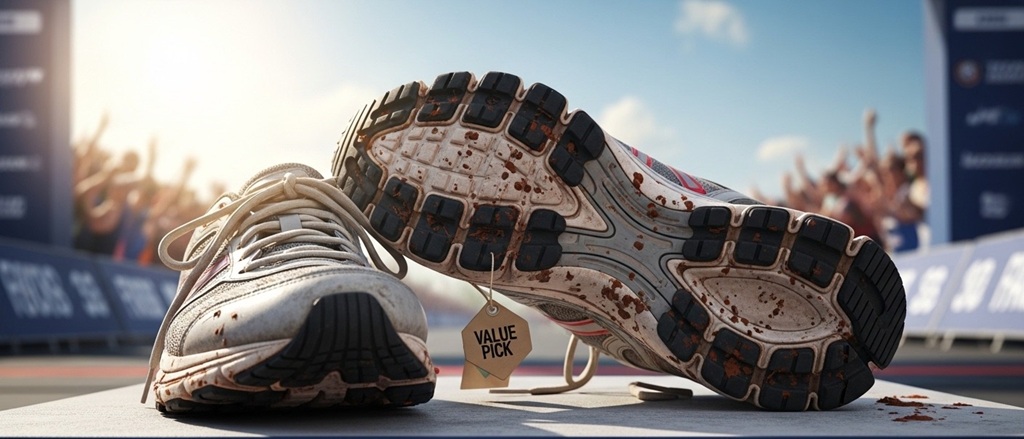
Short answer: Most budget running shoes last between 300 and 500 miles.
Shoe lifespan depends on running style, body weight, terrain, and material quality.
Signs You Need New Running Shoes
- Midsole feels compressed
- Outsole tread is worn down
- Knee or foot pain appears during runs
- Shoe creases excessively in the midsole
Running experts recommend replacing shoes after about 400 miles for optimal cushioning and injury prevention.
What Mistakes Should You Avoid When Buying Cheap Running Shoes?
Short answer: Avoid choosing shoes based only on price, style, or brand reputation.
Common Buying Mistakes
- Buying shoes that are too small
- Ignoring arch support needs
- Choosing fashion sneakers instead of running shoes
- Ignoring cushioning quality
- Using worn-out shoes for too long
Proper fit matters as much as shoe quality. Experts recommend leaving about half an inch of space between the longest toe and the shoe’s front.
Conclusion: Affordable Running Shoes Can Deliver Strong Performance
Finding reliable running shoes does not require spending hundreds of dollars. Many budget athletic shoes provide the cushioning, stability, and durability needed for regular training.
The key is understanding which features matter most. Lightweight construction, breathable uppers, proper cushioning, and durable outsoles are the elements that support comfortable running.
Smart shopping strategies also help reduce costs. Buying previous-season models, checking sales, and comparing retailers can reveal high-quality training footwear at affordable prices.
If you focus on function rather than marketing, you can find lightweight running shoes that support your training goals without overspending.
Ready to upgrade your running gear? Start comparing affordable running shoe options today and choose a pair that fits your stride, your training routine, and your budget.
FAQ: Cheap Running Shoes That Perform Well
Are cheap running shoes safe for regular training?
Yes. Many budget athletic shoes provide adequate cushioning and support for regular training. As long as the shoe includes proper midsoles and durable outsoles, it can perform well for daily runs.
What is the best price range for budget running shoes?
The most reliable affordable running shoes usually cost between $50 and $100. In this range, many brands offer models designed for comfort and durability.
Can lightweight running shoes prevent injuries?
Lightweight running shoes can reduce fatigue and improve running efficiency. However, injury prevention also depends on proper fit, cushioning, and running technique.
How do I know if a running shoe fits correctly?
A proper fit allows about half an inch of space between the toes and the shoe’s front. The heel should feel secure without slipping, and the midfoot should feel comfortably supported.
Is it better to buy expensive running shoes?
Expensive shoes often include advanced materials and technologies. However, many runners find that budget athletic shoes perform well for everyday training.
How often should running shoes be replaced?
Most running experts recommend replacing shoes after 300 to 500 miles of use. Worn cushioning can increase joint stress and reduce comfort.
Are training footwear and running shoes the same?
Training footwear refers to shoes designed for multiple workouts, including running, gym training, and cardio exercises. Running shoes are specifically designed for repetitive forward motion.
Related Topic: How to Pick Jewelry for Maxi Dress Dark Styling
Read Next: Y2K Mens Fashion Low Rise Cargo Pants Outfit Formula